UQ (The University of Queensland) Brand Signage System
Brand Colours and Usage
The University of Queensland (UQ) maintains a distinctive and consistent visual identity centered around UQ Purple, which serves as the university’s primary corporate color, supported by white and dark grey tones.
The logo is governed by strict clear space requirements to ensure visibility, consistency, and brand recognition across all applications.
Typically:
-
The purple logo is used on light backgrounds.
-
A white reversed logo is used on dark backgrounds.
-
The official Coat of Arms is reserved for formal academic and ceremonial applications.
-
The modern UQ logo is used for marketing, communications, and digital platforms.
UQ Purple has become one of the university’s most recognizable visual assets, symbolizing:
-
Excellence
-
Academic authority
-
Innovation
-
Global impact
Primary Signage Materials
Acrylic
Acrylic is one of the most commonly used materials across UQ campuses.
Applications include:
-
Logo panels
-
Illuminated signs
-
Campus wayfinding systems
Advantages:
-
Excellent colour reproduction
-
High light transmission
-
Easy maintenance
Stainless Steel
Applications:
-
Dimensional lettering
-
Crest outlines
-
Building entrance signage
Advantages:
-
Premium appearance
-
Corrosion resistance
-
Long service life
Bronze
Often used for:
-
Heritage buildings
-
Memorial plaques
-
Donor recognition walls
Advantages:
-
Strong sense of tradition
-
Prestige and permanence
-
Alignment with academic heritage
Aluminium Composite Panel (ACP)
Applications:
-
External building signage
-
Directional signage systems
Advantages:
-
Lightweight
-
Durable
-
Suitable for large-scale installations
LED Illumination Systems
Many UQ buildings utilize:
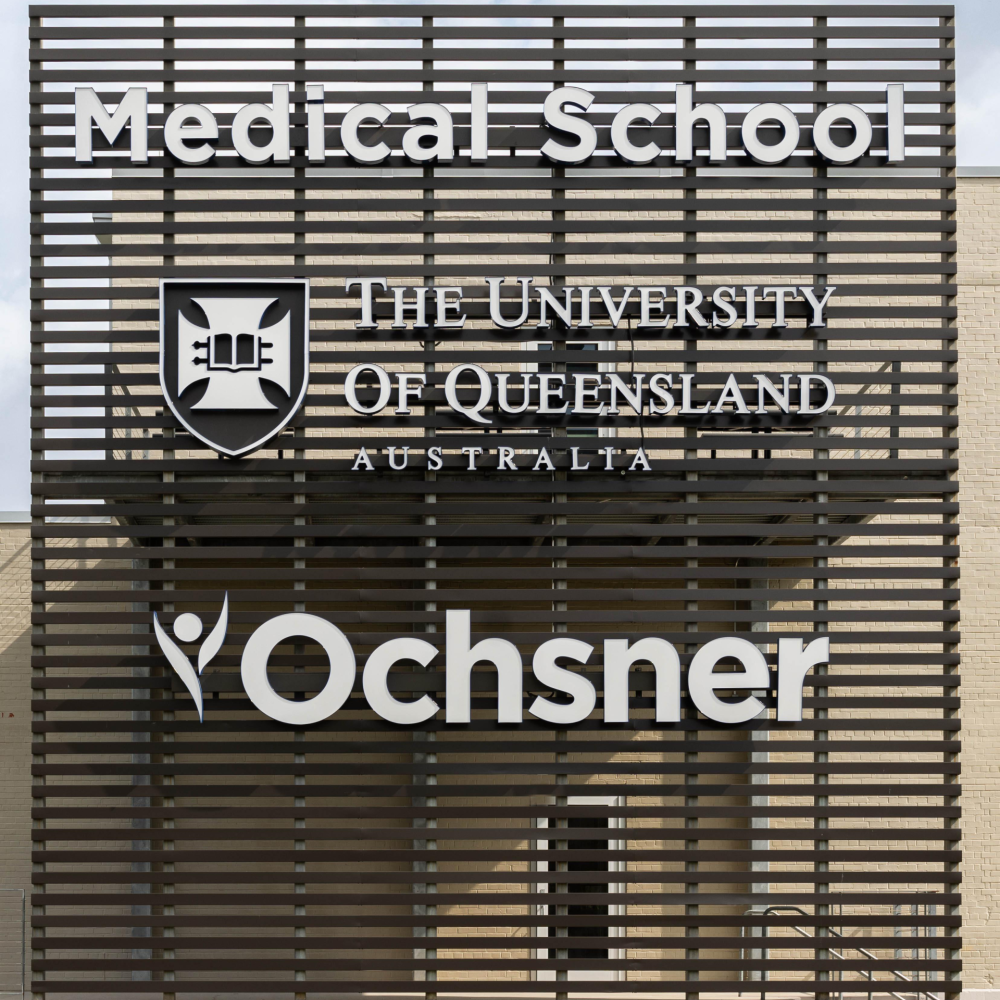
LED Backlit Signage
combined with:
-
Acrylic faces
-
Stainless steel lettering
to create a clean and evenly illuminated appearance.
Common locations include:
-
Main campus entrances
-
Libraries
-
Research centres
-
International education facilities
Benefits include:
-
Improved night-time visibility
-
Enhanced brand presence
-
Strong campus identification
Secondary Structural Materials
To ensure structural integrity and long-term durability, UQ signage systems often incorporate:
Powder-Coated Aluminium
Used for:
-
Support frames
-
Wayfinding structures
Benefits:
-
Lightweight construction
-
Excellent weather resistance
Galvanized Steel
Used for:
-
Large external signage
-
Gateway monuments
Benefits:
-
High structural strength
-
Long-term outdoor performance
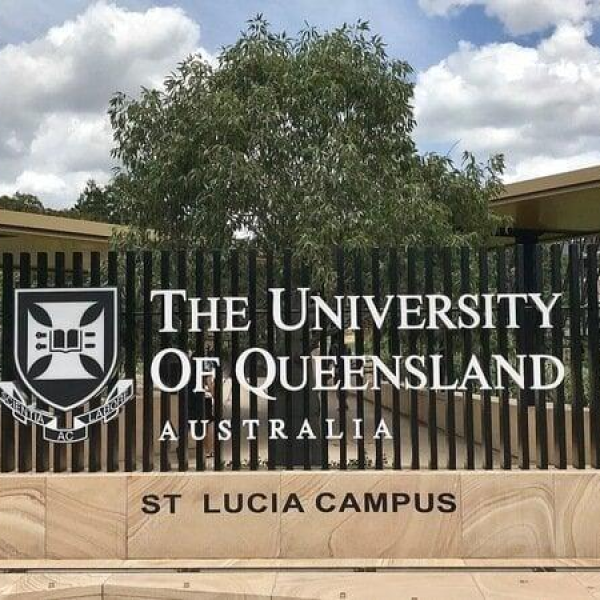
Stone Integration
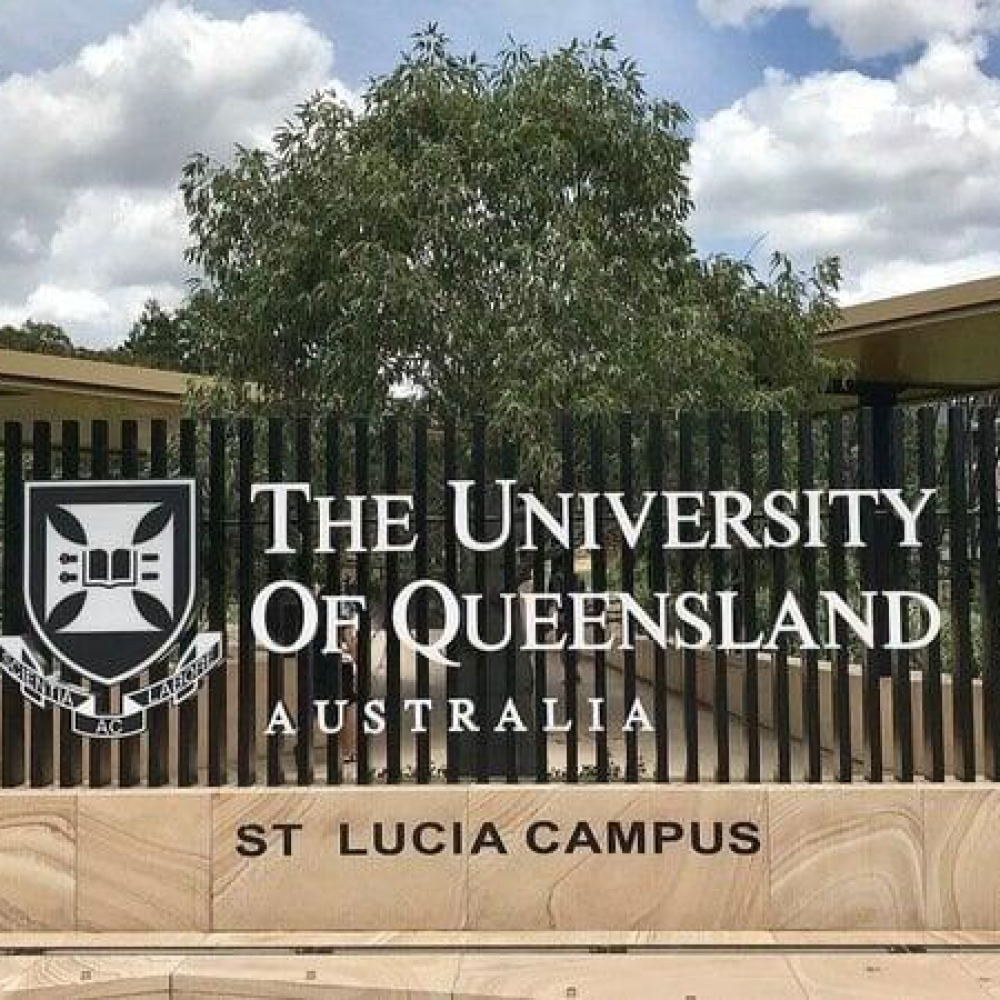
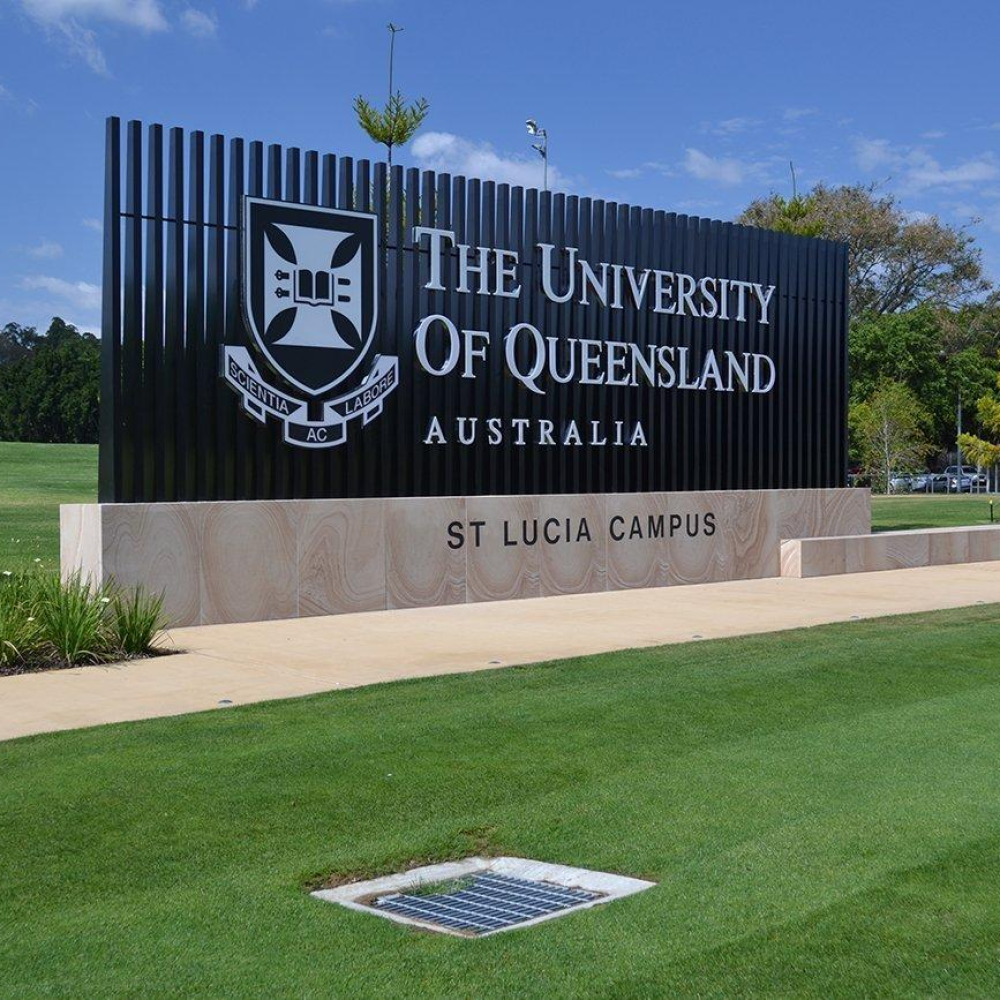
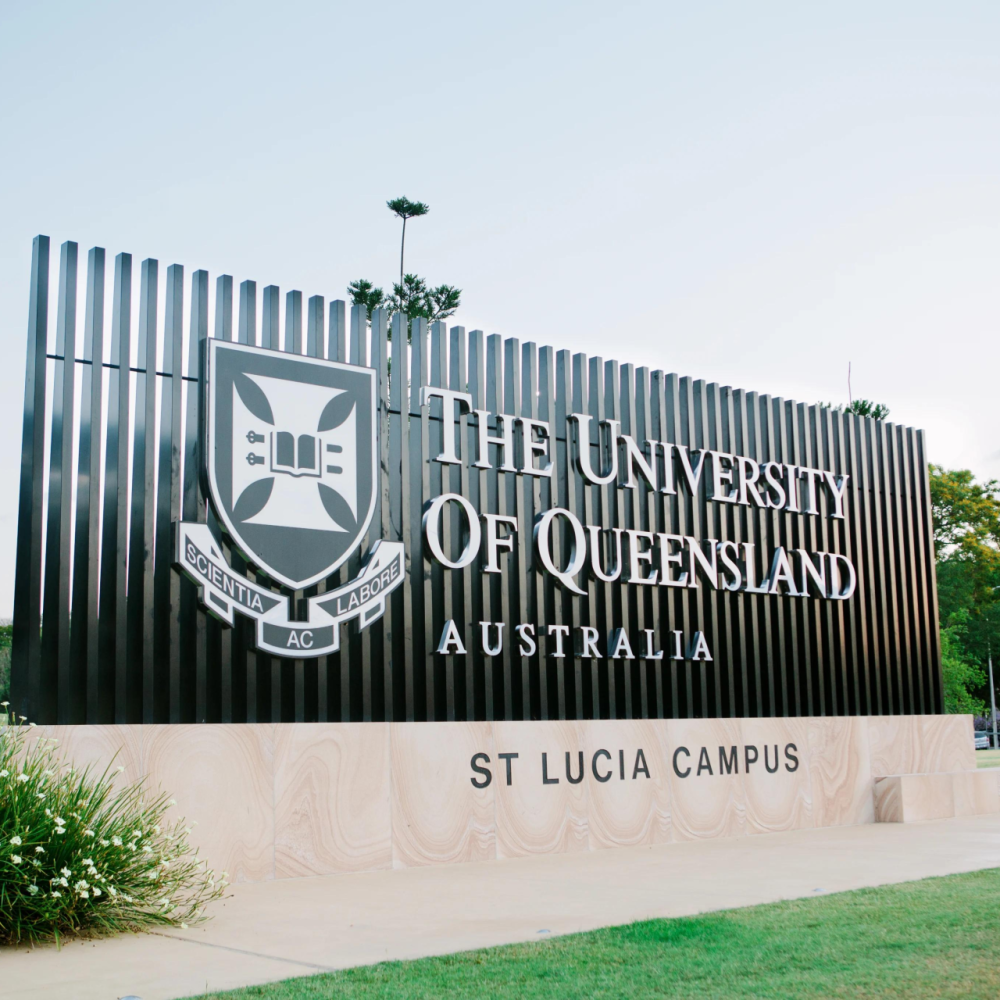
Particularly evident throughout the St Lucia campus, including:
-
Sandstone walls
-
Carved university crests
-
Heritage plaques
This approach reinforces the university’s historical and architectural character.
Interior Wayfinding Materials
For internal signage systems, UQ commonly uses:
Laser-Cut Acrylic Panels
Layered Acrylic Graphics
Frosted Vinyl Graphics
Timber Finishes
These materials are widely applied throughout:
-
Libraries
-
Student centres
-
Medical facilities
-
Business schools
-
Research laboratories
Key Characteristics
Strong Academic Identity
The university crest and motto reinforce UQ’s long-standing academic tradition and reputation.
High Brand Recognition
The distinctive UQ Purple colour provides immediate recognition across all environments.
Balance of Tradition and Innovation
The signage system complements both:
-
Heritage architecture
-
Contemporary research facilities
International Visual Language
The branding is designed to remain effective across:
-
Global partnerships
-
International campuses
-
Worldwide research collaborations
Manufacturing Advantages
Durability
Acrylic, stainless steel, aluminium, and bronze provide excellent resistance to:
-
UV exposure
-
High temperatures
-
Heavy rainfall
making them ideal for Australian conditions.
Brand Consistency
Standardized colour specifications and crest applications ensure a consistent visual identity across:
-
Campuses
-
Research centres
-
International locations
Strong Visual Impact
LED illumination enhances visibility and brand presence during both daytime and nighttime conditions.
Low Maintenance
Modular construction methods allow for:
-
Easy replacement
-
Future upgrades
-
Reduced maintenance costs
 English
 Русский
 Español
 Français
 Nederlands
 Italiano
 Deutsch
 Bank
Bank Real Estate
 School
 Cafe
Cafe Restaurant
 Bar
Bar Supermarket
 Barber Shop
 Gas Station
 Shopping Center
 Drinks
 Food
Food Car
Car Cloth
Cloth Watch
Watch Medical
 Jewelry
 Electronic Equipment